


The front crawl, often referred to as freestyle, is one of the most efficient and fastest swimming strokes. It’s commonly used in competitive swimming due to its speed and ease of learning. Mastering the front crawl swimming technique can improve your swimming performance.
🏊 Nearly 90% of swimming competitions and training sessions include front crawl, according to the American Swimming Coaches Association. Let’s discuss it.

Keep your head in a neutral position, looking straight down. This lessens drag and helps maintain a streamlined body posture.
Make sure your torso is parallel to the water’s surface and flat — horizontal position minimizes resistance.
Keep your legs close together with feet slightly below the water surface to minimize resistance and maintain balance.

Hand enters water in line with shoulder, fingers together, slightly angled. Fully extend arm forward upon entry.
Catch phase: hand moves outward and downward. Pull phase: bend elbow and pull hand toward hip in an “S” shape motion.
Hand exits water past hip with palm facing up. Recovery: keep elbow high and relaxed as you move hand forward.
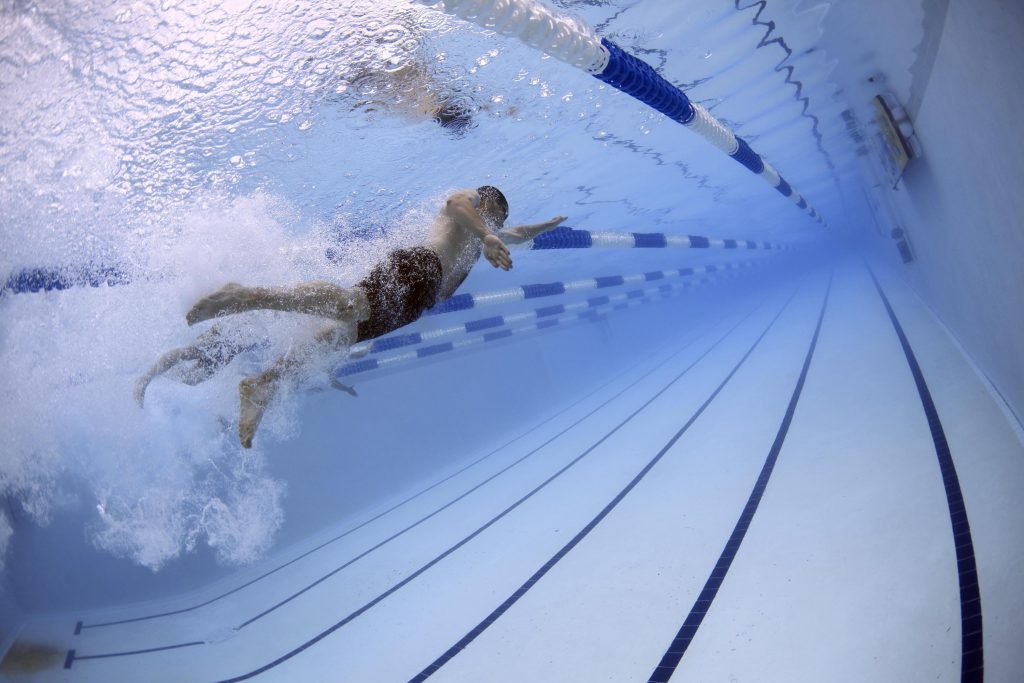
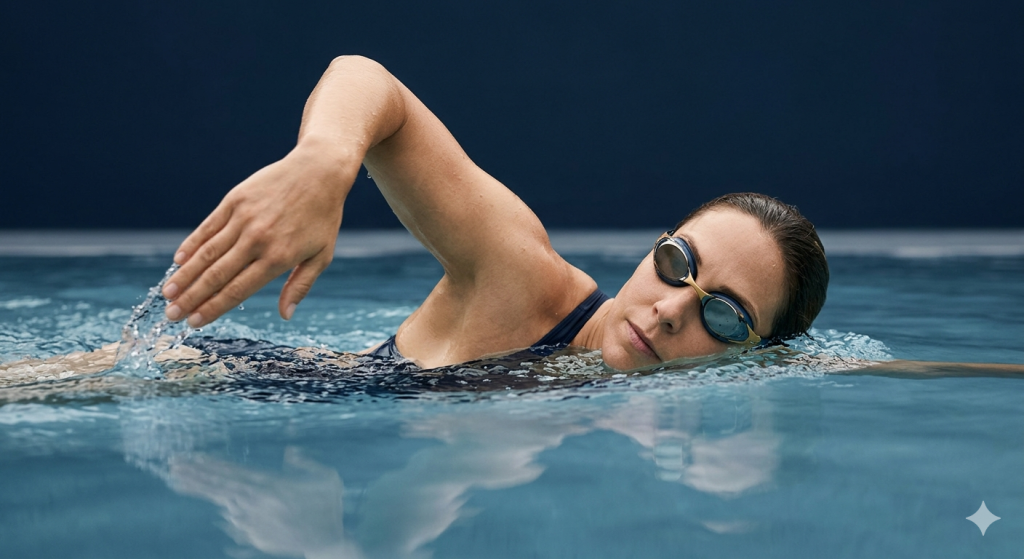
Synchronization: Arm movements should be continuous and alternating. One arm enters water while the other exits.
Timing: The flutter kick should be steady and consistent — typically a 6-beat kick (three kicks per arm stroke).
Body Rotation: Rotate along the longitudinal axis from head to toes. This allows for longer reach and more powerful pull.
Deltoids & rotator cuff
Biceps & triceps
Abdominals & lower back
Quadriceps, hamstrings, calves
Mastering the front crawl swimming technique requires practice, dedication, and understanding of the mechanics involved. Learning the front crawl technique for beginners or refining your front crawl technique for advanced swimmers — focusing on body position, arm movements, leg movements, breathing, and coordination will improve performance. So dive in, practice regularly, and maximize your swimming sessions!
Guest article.
The above may not coincide with the methodology and opinion of the SwimRight Academy Team.


 Blog Editor

Your writing has a way of resonating with me on a deep level. I appreciate the honesty and authenticity you bring to every post. Thank you for sharing your journey with us.